Locate the property
Give the full address and ZIP, unit or suite and the entrance to use. Add a nearby reference only to orient the request.
Water Extraction Near Town Creek Trail for rooms with standing water. Discuss pickup scope, contractor availability and assessment charges for your address.
Discuss water pickupHow the visit is arranged ↗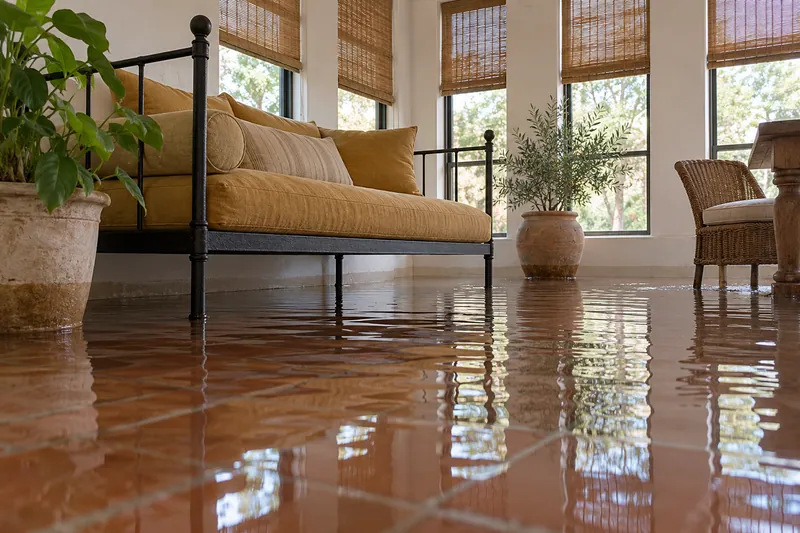
Town Creek Hike & Bike Trail is a route with several City-listed trailheads, including Santa Fe Drive, Fort Worth Highway, Holland Lake Road and Ikard Lane. A request described only as near Town Creek can therefore point to quite different parts of Weatherford. Identify the nearest named trailhead as a reference, then give the actual building address and ZIP. The trail is not an equipment access route to a private property. Explain the permitted entrance and how it connects to the affected rooms, including any tight turns or floor-level changes. A creek-side reference does not prove the source or condition of indoor water. Ask the contractor how the observed pool, surfaces, contents restrictions and setup time are reflected in the collection proposal and its charge.
Arrange water extraction near Town Creek Trail around the actual water, surfaces and access. Speak with the receiving contractor about availability, assessment charges and the collection they propose.
A kitchen pool, a wet hallway and water beneath furniture can require different access and handling. Describe how the spaces connect, where water is visible and what is difficult to reach. Ask what happens to movable items, what equipment time is included and how inaccessible areas will be discussed. Review the charge, exclusions and payment arrangements before booking. If assessment changes the scope, have the responsible person review it before work proceeds.
A room name alone does not establish the charge. Ask about assessment arrangements before a visit, then review the collection actually proposed.
Describe the visible pool, connected rooms and changes in floor finish.
Ask which spaces and accessible surfaces are included. Explain any separate room or outbuilding rather than assuming one setup covers all of them.
Identify entrances, steps, turns and items between the door and wet rooms.
Discuss who moves contents, how equipment reaches the water and whether extra setup or handling changes the charge.
Ask about assessment charges and collection equipment time.
Review payment terms and exclusions. Further checks, another visit or equipment day need their own reason, proposed scope and charge.
Collection, source repairs and reconstruction have different purposes. Confirm the contractor identity, tasks and exclusions before authorizing a visit or approving further work.
Discuss the collection chargeAfter the pool is collected, damp flooring can still need assessment. Ask what the contractor checks and how further equipment, a visit or repairs would be proposed.
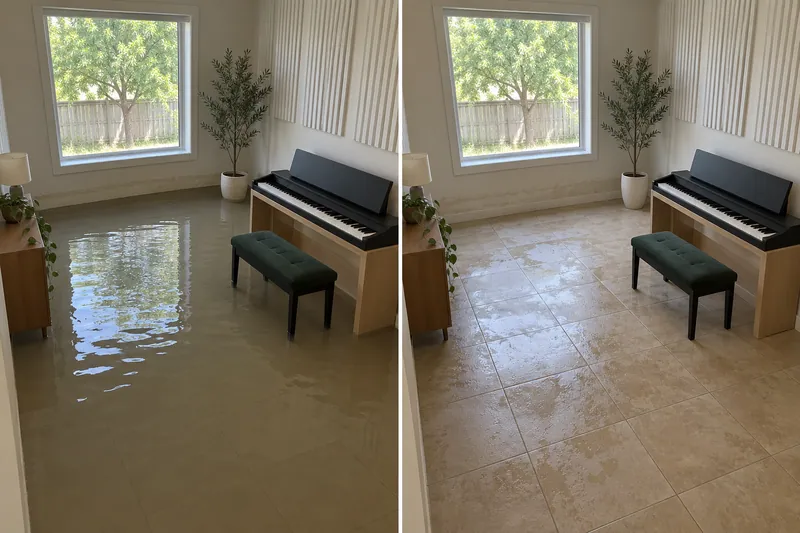
A room-by-room description helps the contractor discuss boundaries, access and the proposed work.
Keep uncertain source details open for assessment. Ask about current address availability and any assessment charge before the visit is arranged.
This checklist changes only the count on this page. The receiving contractor confirms the actual arrangements.
Give the full address and ZIP, unit or suite and the entrance to use. Add a nearby reference only to orient the request.
Explain the wet surfaces, water depth, known source information and access restrictions. Ask about availability and assessment charges.
Discuss boundaries, equipment time, contents responsibilities, exclusions and payment terms. Identify who can authorize work and changes.
Ask what moisture remains and what records are available. Review the purpose, scope and added charge of any further recommendation.
City-listed places orient the conversation. Give the actual building address, ZIP and entrance when discussing contractor availability and equipment access.
Use the call to clarify the work, the charge and the next decision.
Tell the contractor what you can observe: where water is present, when you found it and whether more is appearing. Leave uncertain causes open for assessment. Ask which source-related tasks need a separate professional before the collection is arranged.
Describe the wet rooms, approximate visible depth, floor finishes and route for equipment. Identify furniture or stored contents that restrict access. Ask about assessment charges, included equipment time and the charge for any additional handling before approving work.
Bulk collection is one stage. Ask how the contractor evaluates moisture that remains in flooring or other materials, what records are available and whether more equipment or visits are proposed. Review the reason and cost for each added recommendation.
Do not assume that source repairs, flooring replacement or reconstruction are part of collection. Confirm the actual tasks and exclusions in the proposal. Discuss later repair arrangements separately with the appropriate provider.
Explain whether an owner, manager or another responsible person controls entry, work approval and payment. Have that person involved in the arrangements. Confirm the contractor identity, scope and charges before anyone authorizes collection.
Name the nearest relevant trailhead or street, then provide the full building address and ZIP. Several access points serve the trail. Describe the entrance to your property separately so the collection route is clear.